Data Science & Machine Learning(Theory+Projects)A-Z 90 HOURS

- Descrição
- Currículo
- FAQ
- Revisões
Comprehensive Course Description:
Electrification was undeniably one of the greatest engineering feats of the 20th century. The invention of the electric motor dates back to 1821, with mathematical analysis of electrical circuits following in 1827. However, it took several decades for the full electrification of factories, households, and railways to begin. Fast forward to today, and we are witnessing a similar trajectory with Artificial Intelligence (AI). Despite being formally founded in 1956, AI has only recently begun to revolutionize the way humanity lives and works.
Similarly, Data Science is a vast and expanding field that encompasses data systems and processes aimed at organizing and deriving insights from data. One of the most important branches of AI, Machine Learning (ML), involves developing systems that can autonomously learn and improve from experience without human intervention. ML is at the forefront of AI, as it aims to endow machines with independent learning capabilities.
Our “Data Science & Machine Learning Full Course in 90 Hours” offers an exhaustive exploration of both data science and machine learning, providing in-depth coverage of essential concepts in these fields. In today’s world, organizations generate staggering amounts of data, and the ability to store, analyze, and derive meaningful insights from this data is invaluable. Data science plays a critical role here, focusing on data modeling, warehousing, and deriving practical outcomes from raw data.
For data scientists, AI and ML are indispensable, as they not only help tackle large data sets but also enhance decision-making processes. The ability to transition between roles and apply these methodologies across different stages of a data science project makes them invaluable to any organization.
What Makes This Course Unique?
This course is designed to provide both theoretical foundations and practical, hands-on experience. By the end of the course, you will be equipped with the knowledge to excel as a data science professional, fully prepared to apply AI and ML concepts to real-world challenges.
The course is structured into several interrelated sections, each of which builds upon the previous one. While you may initially view each section as an independent unit, they are carefully arranged to offer a cohesive and sequential learning experience. This allows you to master foundational skills and gradually tackle more complex topics as you progress.
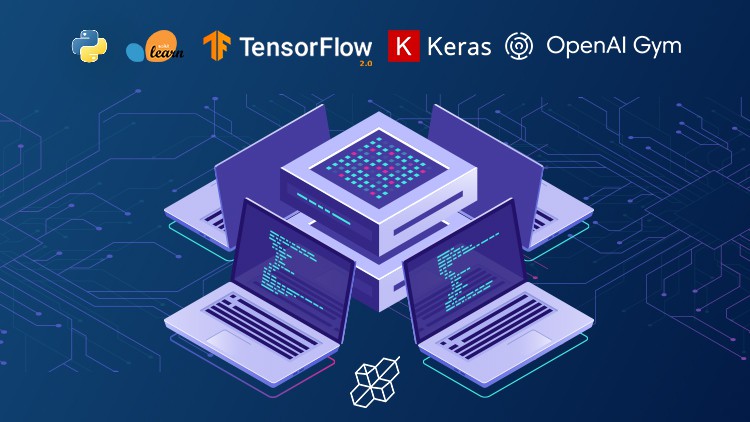
The “Data Science & Machine Learning Full Course in 90 HOURS” is crafted to equip you with the most in-demand skills in today’s fast-paced world. The course focuses on helping you gain a deep understanding of the principles, tools, and techniques of data science and machine learning, with a particular emphasis on the Python programming language.
Key Features:
-
Comprehensive and methodical pacing that ensures all learners—beginners and advanced—can follow along and absorb the material.
-
Hands-on learning with live coding, practical exercises, and real-world projects to solidify understanding.
-
Exposure to the latest advancements in AI and ML, as well as the most cutting-edge models and algorithms.
-
A balanced mix of theoretical learning and practical application, allowing you to immediately implement what you learn.
The course includes over 700 HD video tutorials, detailed code notebooks, and assessment tasks that challenge you to apply your knowledge after every section. Our instructors, passionate about teaching, are available to provide support and clarify any doubts you may have along your learning journey.
Course Content Overview:
-
Python for Data Science and Data Analysis:
-
Introduction to problem-solving, leading up to complex indexing and data visualization with Matplotlib.
-
No prior knowledge of programming is required.
-
Master data science packages such as NumPy, Pandas, and Matplotlib.
-
After completing this section, you will have the skills necessary to work with Python and data science packages, providing a solid foundation for transitioning to other programming languages.
-
-
Data Understanding and Visualization with Python:
-
Delve into advanced data manipulation and visualization techniques.
-
Explore widely used packages, including Seaborn, Plotly, and Folium, for creating 2D/3D visualizations and interactive maps.
-
Gain the ability to handle complex datasets, reducing your dependency on core Python language and enhancing your proficiency with data science tools.
-
-
Mastering Probability and Statistics in Python:
-
Learn the theoretical foundation of data science by mastering Probability and Statistics.
-
Understand critical concepts like conditional probability, statistical inference, and estimations—key pillars for ML techniques.
-
Explore practical applications and derive important relationships through Python code.
-
-
Machine Learning Crash Course:
-
A thorough walkthrough of the theoretical and practical aspects of machine learning.
-
Build machine learning pipelines using Sklearn.
-
Dive into more advanced ML concepts and applications, preparing you for deeper exploration in subsequent sections.
-
-
Feature Engineering and Dimensionality Reduction:
-
Understand the importance of data preparation for improving model performance.
-
Learn techniques for selecting and transforming features, handling missing data, and enhancing model accuracy and efficiency.
-
The section includes real-world case studies and coding examples in Python.
-
-
Artificial Neural Networks (ANNs) with Python:
-
ANNs have revolutionized machine learning with their ability to process large amounts of data and identify intricate patterns.
-
Learn the workings of TensorFlow, Google’s deep learning framework, and apply ANN models to real-world problems.
-
-
Convolutional Neural Networks (CNNs) with Python:
-
Gain a deep understanding of CNNs, which have revolutionized computer vision and many other fields, including audio processing and reinforcement learning.
-
Build and train CNNs using TensorFlow for various applications, from facial recognition to neural style transfer.
-
By the End of This Course, You Will Be Able To:
-
Understand key principles and theories in Data Science and Machine Learning.
-
Implement Python-based machine learning models using real-world datasets.
-
Apply advanced data science techniques to solve complex problems.
-
Take on challenging roles in data science and machine learning with confidence.
Who Should Enroll:
-
Individuals from non-engineering backgrounds eager to transition into Data Science.
-
Aspiring data scientists who want to work with real-world datasets.
-
Business analysts looking to gain expertise in Data Science & ML.
-
Anyone passionate about programming, numbers, and data-driven decision-making.
Enroll now and start your exciting journey in the fields of Data Science and Machine Learning. This course simplifies even the most complex concepts and makes learning a rewarding experience.
-
5
 Links for the Course's Materials and Codes
 -
6
 Introduction to the Course: Focus of the Course-Part 1
 -
7
Introduction to the Course: Focus of the Course-Part 2
-
8
Basics of Programming: Understanding the Algorithm
-
9
Basics of Programming: FlowCharts and Pseudocodes
-
10
Basics of Programming: Example of Algorithms- Making Tea Problem
-
11
Basics of Programming: Example of Algorithms-Searching Minimun
-
12
Basics of Programming: Example of Algorithms-Sorting Problem
-
13
Basics of Programming: Sorting Problem in Python
-
14
Why Python and Jupyter Notebook: Why Python
-
15
Why Python and Jupyter Notebook: Why Jupyter Notebooks
-
16
Installation of Anaconda and IPython Shell: Installing Python and Jupyter Anacon
-
17
Installation of Anaconda and IPython Shell: Your First Python Code- Hello World
-
18
Installation of Anaconda and IPython Shell: Coding in IPython Shell
-
19
Variable and Operator: Variables
-
20
Variable and Operator: Operators
-
21
Variable and Operator: Variable Name Quiz
-
22
Variable and Operator: Bool Data Type in Python
-
23
Variable and Operator: Comparison in Python
-
24
Variable and Operator: Combining Comparisons in Python
-
25
Variable and Operator: Combining Comparisons Quiz
-
26
Python Useful function: Python Function- Round
-
27
Python Useful function: Python Function- Divmod
-
28
Python Useful function: Python Function- Is instance and PowFunctions
-
29
Python Useful function: Python Function- Input
-
30
Control Flow in Python: If Python Condition
-
31
Control Flow in Python: if Elif Else Python Conditions
-
32
Control Flow in Python: More on if Elif Else Python Conditions
-
33
Control Flow in Python: Indentations
-
34
Control Flow in Python: Comments and Problem Solving Practice With If
-
35
Control Flow in Python: While Loop
-
36
Control Flow in Python: While Loop break Continue
-
37
Control Flow in Python: For Loop
-
38
Control Flow in Python: Else In For Loop
-
39
Control Flow in Python: Loops Practice-Sorting Problem
-
40
 Practice Test Python #01
 -
41
Function and Module in Python: Functions in Python
-
42
Function and Module in Python: DocString
-
43
Function and Module in Python: Input Arguments
-
44
Function and Module in Python: Multiple Input Arguments
-
45
Function and Module in Python: Ordering Multiple Input Arguments
-
46
Function and Module in Python: Output Arguments and Return Statement
-
47
Function and Module in Python: Function Practice-Output Arguments and Return Statement
-
48
Function and Module in Python: Variable Number of Input Arguments
-
49
Function and Module in Python: Variable Number of Input Arguments as Dictionary
-
50
Function and Module in Python: Default Values in Python
-
51
Function and Module in Python: Modules in Python
-
52
Function and Module in Python: Making Modules in Python
-
53
Function and Module in Python: Function Practice-Sorting List in Python
-
54
String in Python: Strings
-
55
String in Python: Multi Line Strings
-
56
String in Python: Indexing Strings
-
57
String in Python: String Methods
-
58
String in Python: String Escape Sequences
-
59
Data Structure (List, Tuple, Set, Dictionary): Introduction to Data Structure
-
60
Data Structure (List, Tuple, Set, Dictionary): Defining and Indexing
-
61
Data Structure (List, Tuple, Set, Dictionary): Insertion and Deletion
-
62
Data Structure (List, Tuple, Set, Dictionary): Python Practice-Insertion and Deletion
-
63
Data Structure (List, Tuple, Set, Dictionary): Deep Copy or Reference Slicing
-
64
Data Structure (List, Tuple, Set, Dictionary): Exploring Methods Using TAB Completion
-
65
Data Structure (List, Tuple, Set, Dictionary): Data Structure Abstract Ways
-
66
Data Structure (List, Tuple, Set, Dictionary): Data Structure Practice
-
67
NumPy for Numerical Data Processing: Introduction to NumPy
-
68
NumPy for Numerical Data Processing: NumPy Dimensions
-
69
NumPy for Numerical Data Processing: NumPy Shape, Size and Bytes
-
70
NumPy for Numerical Data Processing: Arange, Random and Reshape-Part 1
-
71
NumPy for Numerical Data Processing: Arange, Random and Reshape-Part 2
-
72
NumPy for Numerical Data Processing: Slicing-Part 1
-
73
NumPy for Numerical Data Processing: Slicing-Part 2
-
74
NumPy for Numerical Data Processing: NumPy Masking
-
75
NumPy for Numerical Data Processing: NumPy BroadCasting and Concatination
-
76
NumPy for Numerical Data Processing: NumPy ufuncs Speed Test
-
77
Pandas for Data Manipulation: Introduction to Pandas
-
78
Pandas for Data Manipulation: Pandas Series
-
79
Pandas for Data Manipulation: Pandas Data Frame
-
80
Pandas for Data Manipulation: Pandas Missing Values
-
81
Pandas for Data Manipulation: Pandas .loc and .iloc
-
82
Pandas for Data Manipulation: Pandas Practice-Using COVID19 Data -Part 1
-
83
Pandas for Data Manipulation: Pandas Practice-Using COVID19 Data -Part 2
-
84
Matplotlib, Seaborn, and Bokeh for Data Visualization: Introduction to Matplotlib
-
85
Matplotlib, Seaborn, and Bokeh for Data Visualization:Trend Analysis COVID19
-
86
Matplotlib, Seaborn, and Bokeh for Data Visualization: Seaborn Vs. Matplotlib Style
-
87
Matplotlib, Seaborn, and Bokeh for Data Visualization: Histograms Kdeplot
-
88
Matplotlib, Seaborn, and Bokeh for Data Visualization: Seaborn Pairplot and Jointplot
-
89
Matplotlib, Seaborn, and Bokeh for Data Visualization: Seaborn Pairplot using Iris Data
-
90
Matplotlib, Seaborn, and Bokeh for Data Visualization: Introduction to Bokeh
-
91
Matplotlib, Seaborn, and Bokeh for Data Visualization: Bokeh Gridplot
-
92
Scikit-Learn for Machine Learning: Introduction to Scikit-Learn
-
93
Scikit-Learn for Machine Learning: Scikit-Learn for Linear Regression
-
94
Scikit-Learn for Machine Learning: Scikit-Learn for SVM and Random Forests
-
95
Scikit-Learn for Machine Learning: ScikitLearn- Trend Analysis COVID19
-
96
Scikit-Learn for Machine Learning: THANK YOU Bonus Video
-
97
Practice Test Python #02